
Have you ever finished a meal feeling uncomfortably full, wondering how that happened? In our world of ever-expanding portion sizes, it's surprisingly easy to lose track of how much we're actually eating. The good news is that with a few simple strategies, you can regain control without feeling deprived.
Understanding portion sizes is crucial for weight management and balanced nutrition, especially in an era of super-sized servings. Research consistently shows that people tend to eat more when presented with larger portions, regardless of their hunger levels. This phenomenon, known as the "portion size effect," contributes significantly to overeating and weight gain.
As a nutrition specialist with over 15 years of clinical experience, I've helped hundreds of patients develop sustainable eating habits. The key isn't about strict dieting or elimination—it's about learning to recognize appropriate portions and implementing practical strategies that fit into your lifestyle.
8 Evidence-Based Portion Control Strategies
1. Use Visual Cues
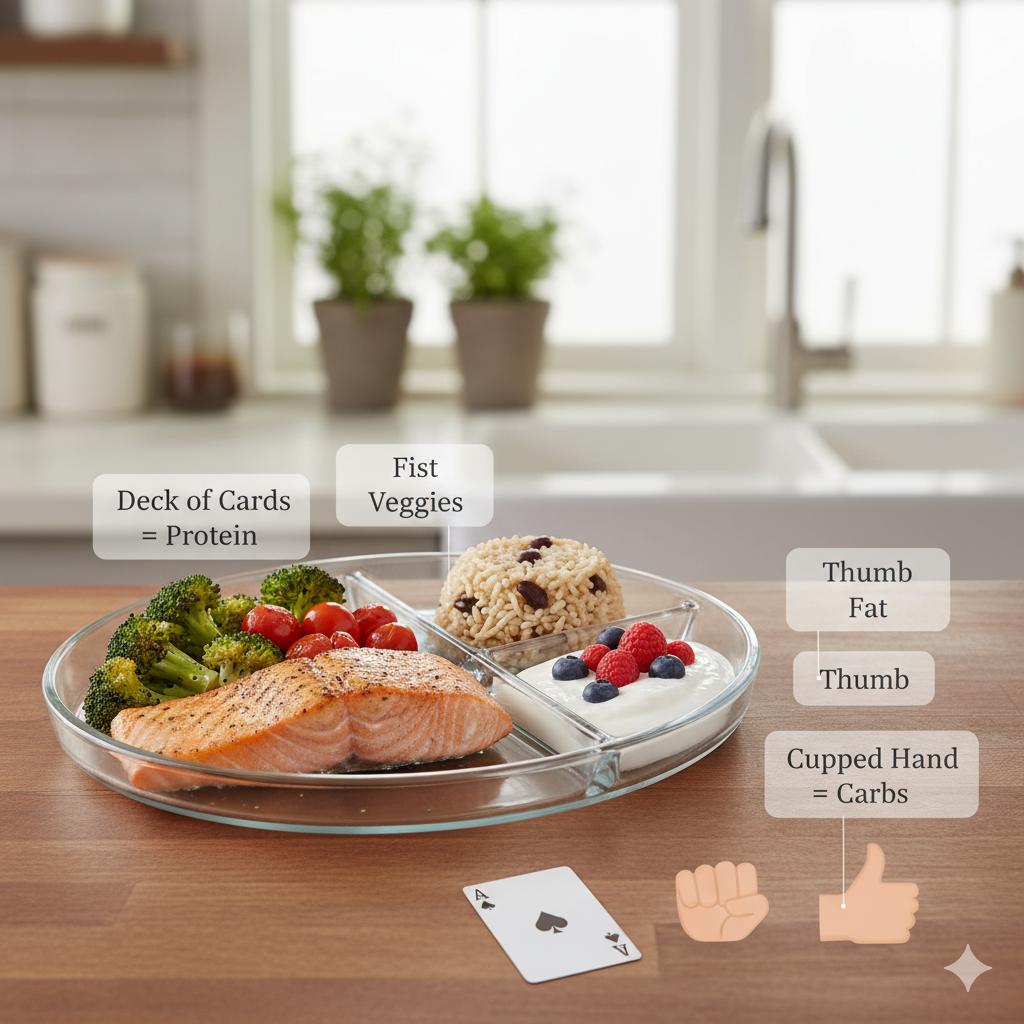
Instead of carrying measuring cups everywhere, use everyday objects as visual references. For example:
- A serving of protein (meat, fish, poultry) should be about the size of your palm or a deck of cards
- A serving of carbohydrates (rice, pasta) should be about the size of your fist or a tennis ball
- A serving of cheese should be about the size of your thumb
- Vegetables should fill half your plate
This method is surprisingly accurate and becomes second nature with practice.
2. Plate Composition Method
Divide your plate mentally or use compartmentalized plates to ensure proper proportions:
- Fill half your plate with non-starchy vegetables (broccoli, spinach, peppers, etc.)
- Allocate one-quarter for lean protein (chicken, fish, tofu, legumes)
- Reserve the remaining quarter for complex carbohydrates (quinoa, brown rice, sweet potatoes)
This approach automatically creates balanced meals with appropriate portions.
3. Mindful Eating Techniques
Slow down and pay attention to your food. Research shows that eating mindfully can reduce consumption by up to 30% while increasing satisfaction:
- Remove distractions (TV, phones) during meals
- Chew thoroughly and savor each bite
- Pause halfway through your meal to assess your hunger level
- Use smaller utensils to naturally slow your eating pace
4. Environmental Adjustments
Your surroundings significantly influence how much you eat. Simple changes can make a big difference:
- Use smaller plates and bowls—studies show people serve themselves less and feel equally satisfied
- Serve food from the kitchen rather than family-style at the table
- Keep tempting foods out of sight or in inconvenient locations
- Pre-portion snacks into small containers instead of eating from the package
5. The 20-Minute Rule
It takes approximately 20 minutes for your brain to register fullness. By eating slowly and waiting before considering seconds, you give your body time to signal satisfaction. If you're still hungry after 20 minutes, then have a small additional portion.
6. Hydration Strategy
Drink a glass of water 15-30 minutes before meals. This simple practice can reduce the amount of food you consume during the meal. Sometimes thirst is mistaken for hunger, so staying adequately hydrated throughout the day also helps prevent unnecessary snacking.
7. Pre-Portioning
When possible, portion out foods in advance. This is especially helpful for calorie-dense foods like nuts, oils, and desserts. Instead of eating directly from packages, measure appropriate servings into containers or plates.
8. The Half-Plate Rule When Dining Out
Restaurant portions are notoriously oversized. When eating out, immediately ask for a to-go box and set aside half of your meal before you begin eating. This not only controls your portion but also provides a ready-made meal for another day.
Sustainable Benefits
These portion control strategies aren't about deprivation—they're about recalibrating your understanding of appropriate serving sizes. When implemented consistently, they can lead to sustainable weight management, improved digestion, better energy levels, and a healthier relationship with food.
Remember that perfection isn't the goal. Start with one or two strategies that feel manageable, and gradually incorporate others as they become habitual. The most effective approach is the one you can maintain long-term.
Frequently Asked Questions
Research on habit formation suggests it takes an average of 66 days for a new behavior to become automatic, but this can vary from 18 to 254 days depending on the person and the complexity of the behavior. Start with one simple strategy, like using smaller plates, and build from there. Consistency is more important than perfection.
While the fundamental principles apply to most people, individual needs vary. Athletes and highly active individuals may require larger portions to meet energy demands. Those with specific medical conditions like diabetes should work with a healthcare provider to tailor portion control to their nutritional requirements. The visual cues can be scaled up or down while maintaining the same proportions.
This is an important distinction. A "serving size" is a standardized amount of food used for nutritional information (like on food labels), while a "portion size" is the amount you actually choose to eat. Many people consume portions that are multiple servings without realizing it. The strategies in this article help align your portions with appropriate serving sizes for your needs.