Your hair is often the first place nutritional deficiencies show up. As a dermatologist with over 15 years of experience, I've seen countless patients transform their hair health simply by adjusting their diets. The connection between what you eat and how your hair looks and feels is undeniable.
The Hair Growth Cycle and Nutrition
Hair grows in cycles, with each strand going through growth (anagen), transition (catagen), and resting (telogen) phases. Nutritional deficiencies can shorten the growth phase and prolong the resting phase, leading to thinner hair and increased shedding. The good news? Proper nutrition can reverse this process.
Key Insight: Hair follicles are among the most metabolically active structures in your body, which means they require a constant supply of nutrients to function optimally.
Essential Nutrients for Hair Health
Based on current research from top health institutions, here are the most critical nutrients for promoting hair growth and thickness:
Protein: The Building Block of Hair
Hair is primarily made of keratin, a protein. Without adequate protein intake, your body can't produce strong hair strands. Aim for 1.2-1.6 grams of protein per kilogram of body weight daily from sources like:
- Eggs (especially the yolks, rich in biotin)
- Lean meats and poultry
- Fish, particularly fatty fish like salmon
- Legumes and lentils
- Greek yogurt and cottage cheese
Iron: Oxygen Delivery for Follicles
Iron helps red blood cells carry oxygen to your hair follicles. Low iron levels (even without anemia) are strongly linked to hair loss, especially in women. Include these iron-rich foods:
- Red meat (most bioavailable form)
- Spinach and other leafy greens
- Lentils and beans
- Pumpkin seeds
- Pair with vitamin C sources to enhance absorption
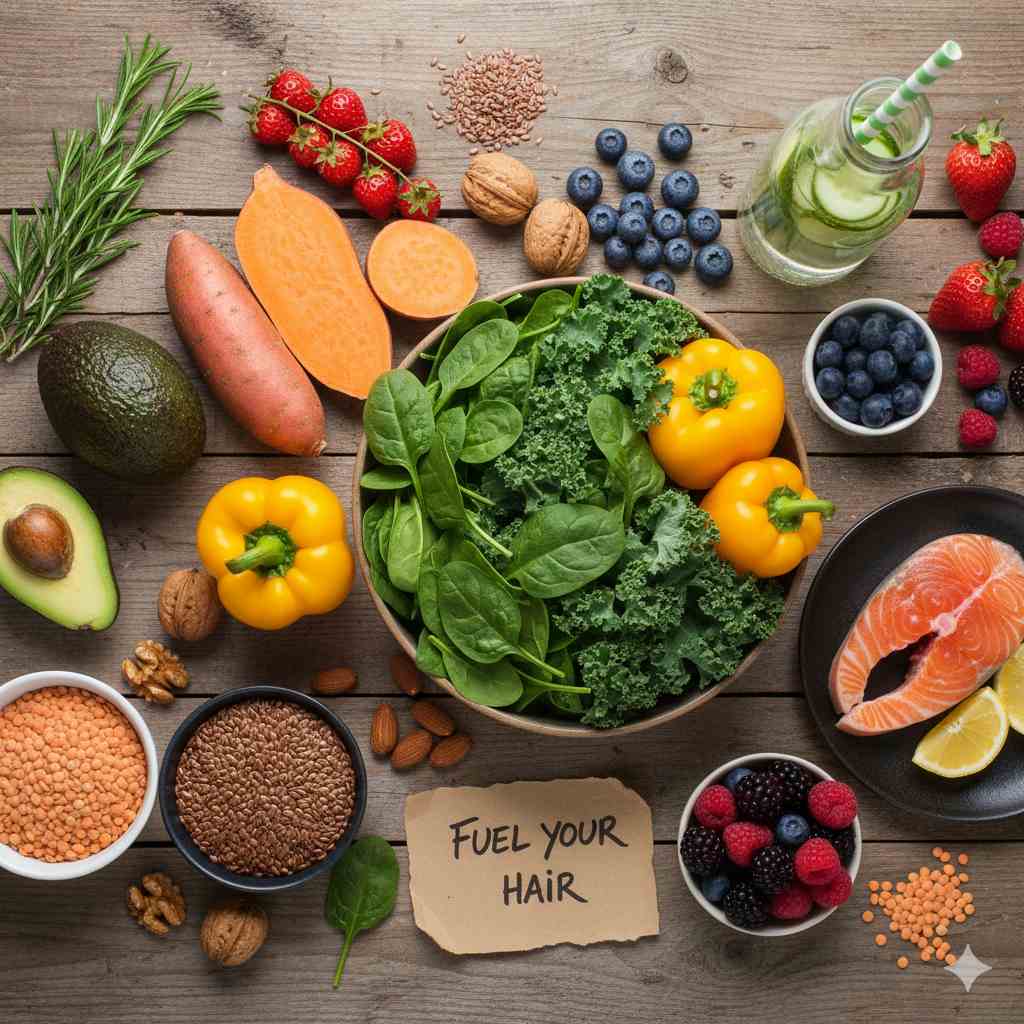
A variety of nutrient-dense foods that support hair health
Omega-3 Fatty Acids: Scalp Health and Shine
These essential fats keep your scalp hydrated and reduce inflammation that can inhibit hair growth. They also add shine to your hair. Best sources include:
- Fatty fish (salmon, mackerel, sardines)
- Flaxseeds and chia seeds
- Walnuts
- Algae and seaweed
Zinc: Follicle Protection and Repair
Zinc plays a crucial role in hair tissue growth and repair. It also helps keep the oil glands around follicles working properly. Find zinc in:
- Oysters (the highest source)
- Beef and lamb
- Pumpkin seeds
- Lentils and chickpeas
Biotin and Other B Vitamins
Biotin (B7) is famous for hair health, but all B vitamins play roles in creating red blood cells that carry oxygen and nutrients to the scalp and hair follicles. Include:
- Whole grains (B vitamins)
- Eggs (biotin)
- Nuts and seeds (biotin)
- Leafy greens (folate)
- Legumes (multiple B vitamins)
Creating a Hair-Healthy Eating Pattern
Rather than focusing on individual nutrients, aim for a balanced diet rich in whole foods. The Mediterranean diet, with its emphasis on vegetables, fruits, healthy fats, and lean proteins, is particularly beneficial for hair health.
Pro Tip: It takes about 3-6 months of consistent nutritional improvements to see noticeable changes in your hair, as that's how long it takes for new hair to grow through the follicle and become visible.
Common Hair Issues and Nutritional Solutions
For Thinning Hair
Focus on adequate protein, iron, zinc, and biotin. Consider adding a tablespoon of ground flaxseed to your morning smoothie or oatmeal for an extra boost of hair-healthy nutrients.
For Dry, Brittle Hair
Increase your intake of omega-3 fatty acids and vitamin E. A handful of walnuts or almonds makes an excellent snack for addressing dryness.
For Slow Growth
Ensure you're getting enough calories overall. Hair growth is not a priority function for your body, so when you're undernourished, it's one of the first processes to slow down.
Foods to Limit for Better Hair Health
While adding nutrient-dense foods is important, it's also helpful to reduce:
- Sugar and refined carbs: Can increase inflammation and potentially affect hair growth
- High-mercury fish: Mercury exposure is linked to hair loss
- Excessive vitamin A: While important, too much can actually contribute to hair loss
Remember, your hair reflects your internal health. By nourishing your body with the right nutrients, you're not just promoting hair growth—you're supporting your overall wellbeing. Start with small, sustainable changes to your diet, and be patient as your hair responds to your improved nutritional status.