
Have you ever tossed and turned all night, only to realize that your evening snack or dinner might be the culprit? As a sleep specialist with over a decade of experience, I've seen countless patients transform their sleep quality simply by adjusting what and when they eat. The connection between nutrition and sleep is profound, yet often overlooked in our quest for better rest.
Your dietary choices directly influence the production of sleep-regulating hormones like melatonin and serotonin, impacting everything from how quickly you fall asleep to the quality of your sleep cycles. In this comprehensive guide, I'll share the science-backed foods that promote restful sleep and those that sabotage it, plus practical strategies for timing your meals to optimize your slumber.
Key Insight: Approximately 95% of the serotonin in your body—a precursor to melatonin—is produced in your digestive tract. This explains why what you eat has such a powerful effect on your sleep-wake cycles.
The Science of Sleep and Nutrition
Before we dive into specific foods, it's important to understand how nutrition affects sleep at a biological level. Your sleep-wake cycle is regulated by circadian rhythms and influenced by neurotransmitters and hormones. The most critical for sleep is melatonin, which signals to your body that it's time to rest.
Certain nutrients help produce melatonin and other sleep-supporting compounds:
- Tryptophan: An amino acid that converts to serotonin and then melatonin
- Magnesium: Helps activate neurotransmitters responsible for sleep
- Calcium: Assists the brain in using tryptophan to manufacture melatonin
- Vitamin B6: A cofactor in the production of serotonin and melatonin
- Complex carbohydrates: Help tryptophan cross the blood-brain barrier more efficiently
Best Foods for Quality Sleep
Based on current nutritional science, these are the top foods that can significantly improve your sleep quality when consumed as part of a balanced diet:
Sleep-Promoting Foods
Sleep-Disrupting Foods
Optimal Timing for Meals and Snacks
When you eat is nearly as important as what you eat when it comes to sleep quality. Here's my recommended schedule based on circadian biology:
Dinner Timing
Aim to finish your last major meal at least 2-3 hours before bedtime. This allows your body to complete the initial stages of digestion before you lie down, reducing the risk of acid reflux and allowing your body to focus on restoration rather than digestion during sleep.
Bedtime Snacks
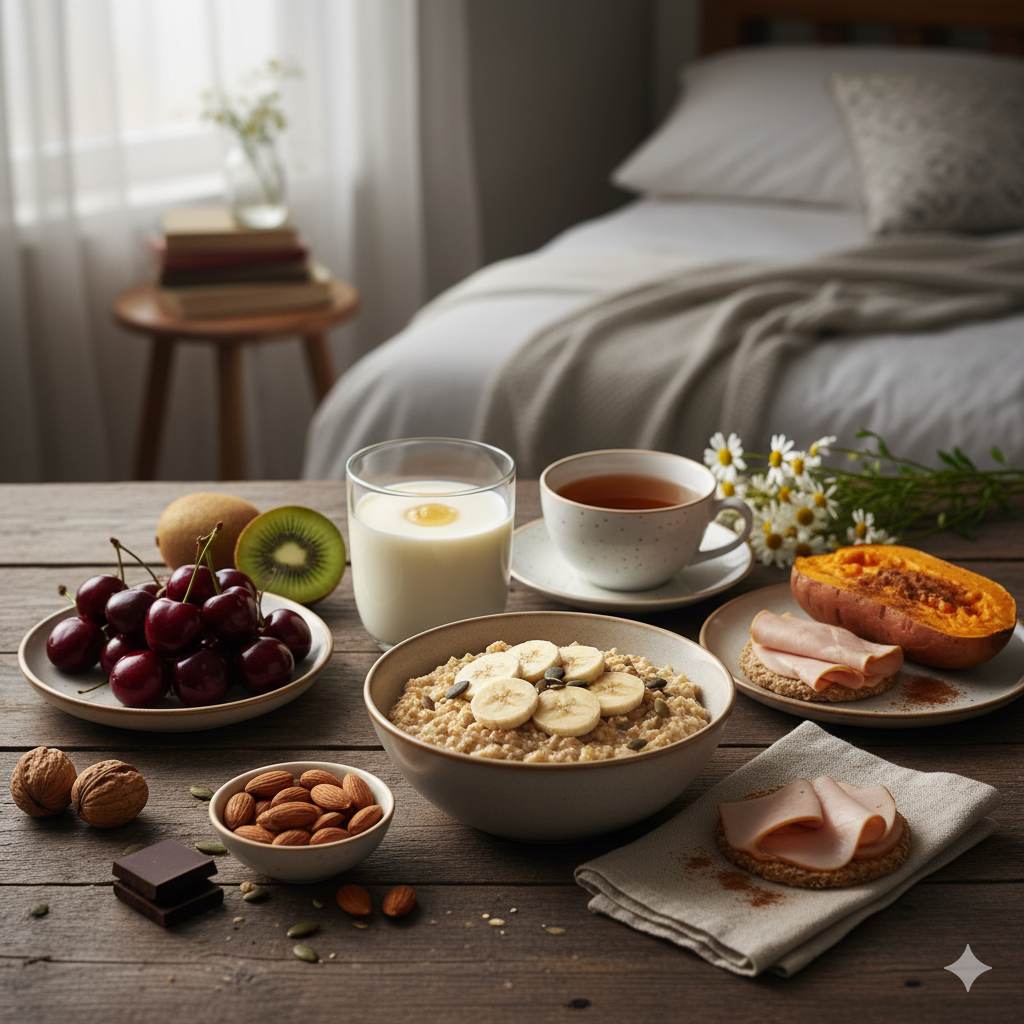
If you need a snack before bed, choose something light that combines complex carbohydrates with a small amount of protein. The ideal bedtime snack should be around 150-200 calories and consumed 30-60 minutes before sleep.
Excellent bedtime snack options include:
- A small bowl of whole-grain cereal with milk
- Half a banana with a tablespoon of almond butter
- A few whole-grain crackers with cheese
- A small serving of Greek yogurt
- A handful of cherries or a small glass of tart cherry juice
Practical Bedtime Nutrition Strategies
Implementing these evidence-based strategies can significantly improve your sleep quality within just a few days:
1. The Magnesium Boost
Magnesium deficiency is linked to poor sleep quality. Include magnesium-rich foods like spinach, pumpkin seeds, yogurt, and almonds in your evening meal. For an extra boost, consider taking a magnesium supplement about 30 minutes before bed (consult your doctor first).
2. The Tryptophan Trick
Combine tryptophan-rich foods (turkey, chicken, eggs, cheese) with complex carbohydrates (whole wheat bread, brown rice) in your evening meal. The carbs stimulate insulin release, which helps clear competing amino acids from the bloodstream, allowing more tryptophan to reach the brain.
3. Hydration Balance
Stay hydrated throughout the day but reduce fluid intake 1-2 hours before bed to minimize nighttime bathroom trips. Herbal teas like chamomile, passionflower, or valerian can be particularly soothing before bedtime.
4. Caffeine Curfew
Establish a caffeine curfew—no caffeine after 2 PM for most people. If you're particularly sensitive, you may need to stop even earlier. Remember that caffeine is found in unexpected places like chocolate, some medications, and even decaf coffee (which contains small amounts).
Frequently Asked Questions
This traditional remedy has some scientific backing. Milk contains tryptophan, and the comforting ritual of drinking something warm before bed can signal to your body that it's time to wind down. However, the effect is likely more psychological than powerfully physiological for most people. If you enjoy it and it helps you relax, it's certainly worth including in your bedtime routine.
I generally recommend finishing larger meals 2-3 hours before bedtime. This allows your body to do the majority of its digestive work before you lie down. However, a small, sleep-promoting snack 30-60 minutes before bed can actually be beneficial, as it prevents hunger from waking you up and can provide nutrients that support sleep. The key is keeping bedtime snacks light and choosing the right combination of foods.
While no single food is a magic bullet for chronic insomnia, certain dietary patterns can significantly improve sleep difficulties. Foods rich in magnesium, calcium, B vitamins, and tryptophan can support the body's natural sleep processes. Additionally, maintaining stable blood sugar throughout the day and avoiding large blood sugar spikes in the evening can prevent nighttime awakenings. For chronic insomnia, it's best to work with a healthcare provider to address underlying causes, but optimizing your nutrition is an excellent complementary approach.