Have you ever walked into a room and completely forgotten why you went there? Or struggled to recall a name that was on the tip of your tongue? These frustrating moments aren't just normal signs of a busy life—they're clues about what's happening inside your brain. The good news is that the solution might be waiting in your kitchen.
As a neurologist with over 15 years of clinical experience, I've witnessed firsthand how nutrition directly impacts cognitive performance. What you eat doesn't just affect your waistline—it fundamentally shapes your brain's structure and function. The latest research reveals that specific foods can enhance memory, sharpen focus, and even protect against age-related cognitive decline.
Your brain is only 2% of your body weight, but it consumes 20% of your daily calories. This energy-hungry organ needs the right fuel to perform at its best.
The Science Behind Brain Nutrition
Before we dive into specific foods, let's understand how nutrition affects your brain. Your brain is composed of nearly 60% fat, making healthy fats essential for its structure. The communication between brain cells depends on neurotransmitters, which are built from the amino acids in protein. Antioxidants protect brain cells from damage caused by free radicals, while vitamins and minerals facilitate countless biochemical reactions.
When you consistently provide your brain with the right nutrients, you're essentially building a cognitive reserve—a buffer that helps maintain function even as you age. This isn't just theoretical; multiple longitudinal studies have shown that people with healthier diets have slower rates of cognitive decline.
Top Brain-Boosting Foods
Fatty Fish
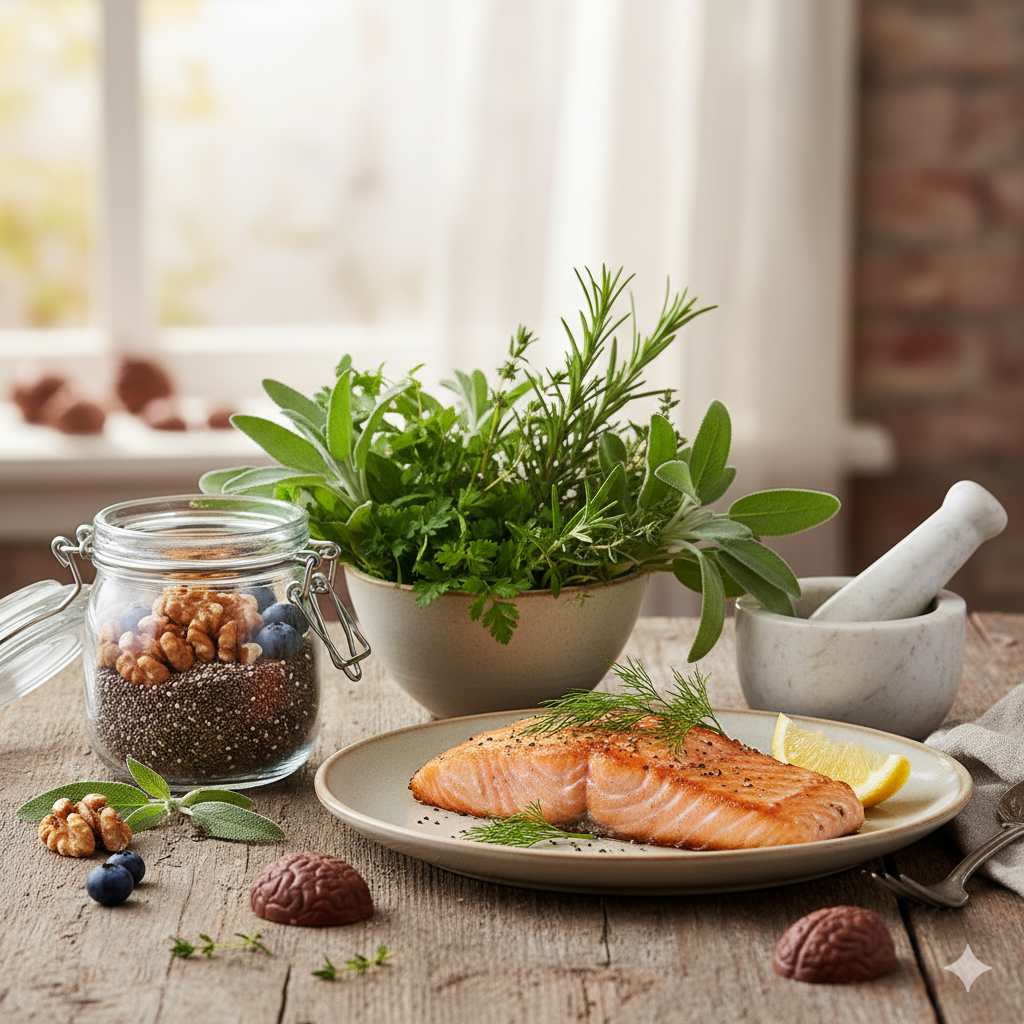
Rich in omega-3 fatty acids (DHA and EPA), which are essential for brain structure and function. Studies show regular consumption can slow age-related mental decline.
Blueberries
Packed with antioxidants that protect brain cells from oxidative stress. Research suggests they may improve communication between brain cells.
Turmeric
Contains curcumin, which can cross the blood-brain barrier and has been shown to reduce inflammation and amyloid plaques associated with Alzheimer's.
Broccoli
High in antioxidants and vitamin K, which is believed to support brain health and cognitive function.
Pumpkin Seeds
Rich in magnesium, iron, zinc, and copper—all crucial minerals for nerve signaling, learning, and memory.
Dark Chocolate
Contains flavonoids, caffeine, and antioxidants that may enhance memory and slow age-related mental decline.
Building a Brain-Healthy Diet
Incorporating these foods into your regular diet doesn't require a complete overhaul. Start by making simple swaps: choose fatty fish like salmon instead of red meat once or twice a week, snack on a handful of nuts and berries instead of processed snacks, and consider adding turmeric to your cooking.
The Mediterranean diet, which emphasizes fruits, vegetables, fish, and healthy fats, has been extensively studied and consistently linked to better cognitive function in older adults. This pattern of eating provides a wide spectrum of brain-protective nutrients.
Consistency matters more than perfection. Adding just one or two brain-healthy foods to your daily routine can make a significant difference over time.
The Gut-Brain Connection
Emerging research highlights the importance of the gut-brain axis—the bidirectional communication between your digestive system and your brain. A healthy gut microbiome, supported by fermented foods and fiber, may positively influence brain function and even mood. This explains why probiotic-rich foods like yogurt and kefir might indirectly support cognitive health.
What we eat today directly impacts how our brains will function tomorrow, next month, and decades from now. By making intentional food choices, we're not just feeding our bodies—we're nourishing our most valuable asset: our minds.